Air Conditioning Contractor Work in HVAC Installation
Air conditioning installation looks simple from the driveway. A truck arrives, a crew unloads a shiny outdoor unit, someone carries sheet metal through the side gate, and by dinner the house is cool enough for the dog to stop giving everyone that betrayed-by-humanity stare.
From the inside of the trade, it is not simple. It is a bundle of sizing, airflow, refrigerant handling, electrical coordination, condensate control, code awareness, and judgment. It sits in that busy crossroads where an air conditioning contractor may need the instincts of a heating contractor, the caution of an electrician, the pipe sense of a plumber, and the patience of a chess player who has just discovered the board is in an attic in August.
HVAC work is its own specialty for a reason. Heating, ventilation, and air conditioning equipment has to be installed and maintained by people who understand how systems behave as systems, not as a pile of expensive boxes connected by wishful thinking. The work overlaps with plumbing, electrical, heating equipment, air conditioning repair service, furnace repair service, and sometimes related installation tasks around gas, water, drainage, and controls. That overlap is useful. It is also where sloppy assumptions get expensive.
A good installation is not just “the new unit is running.” Any unit can run for a while. A good installation means the equipment is correctly selected, properly charged, safely connected, able to move air, and maintainable without requiring the next technician to possess the shoulder flexibility of a circus acrobat.
What an air conditioning contractor actually does
An air conditioning contractor installs, maintains, and services cooling systems. That sounds tidy, which is how you know the sentence was written indoors.
Real HVAC installation involves much more than swapping one metal cabinet for another. The contractor has to understand the building, the load, the duct system, the equipment, the refrigerant circuit, the electrical requirements, the drainage path, and the customer’s expectations. Those expectations Plumber are often expressed in highly technical language, such as “I want the upstairs bedroom to stop feeling like soup.”
The U.S. Department of Energy describes HVAC contractors as specialized contractors whose core business is installing and maintaining heating, ventilation, and air-conditioning equipment. That specialty can include installation, maintenance, repairs, duct cleaning, and plumbing or electrical work associated with heating and cooling equipment. In practice, that means the air conditioning contractor is rarely just handling the outdoor condenser. The job may involve duct transitions, thermostat wiring, condensate drains, refrigerant lines, equipment pads, air handlers, furnaces, heat pumps, and the little access panel screw that somehow vanishes into another dimension.
Trade classifications also reflect this overlap. Plumbing, heating, and air-conditioning work sits together as special trade contractor work, while electrical work has its own separate classification. That distinction matters on a jobsite. An HVAC company may perform certain associated electrical tasks, but the line between HVAC wiring and broader electrical work is not something to treat casually. When the scope calls for an electrician, it calls for an electrician, not “Dave with a voltage tester and confidence.”
Air-conditioning service and repair is also recognized as its own service category, which fits what technicians see every week. Installation and repair share knowledge, but they are not identical. A seasoned installer knows how to set up a system from scratch. A sharp repair technician knows how to diagnose failure, recover from bad installations, and explain why a compressor did not die “for no reason” after being starved for airflow and neglected through three presidential administrations.
Installation begins before the equipment arrives
The biggest mistake in HVAC installation often happens before anyone touches a tool. It happens when equipment is chosen by habit, guesswork, or the old favorite: “Just put in the same size as before.”
That can work. It can also repeat a mistake for another 15 years. If the previous system was oversized, undersized, poorly matched to the ductwork, or installed before major changes to the building, copying it is not wisdom. It is photocopying a typo.
Proper HVAC installation includes correct equipment sizing and refrigerant charging. Both are central to energy use, comfort, and equipment life. When an air conditioner or heat pump is charged properly, it can use less energy and face lower risk of failure. That is not magic. Refrigerant charge affects heat transfer, pressures, compressor operation, and system stability. Too much or too little refrigerant can make an expensive system behave like a bargain fan with delusions of grandeur.
Sizing matters just as much. An oversized system may cool quickly but fail to run long enough for balanced comfort. An undersized system may run constantly and still lose the battle on hot days. Neither condition makes the homeowner cheerful, though oversized equipment at least gives them the illusion of victory for ten minutes at a time.
The contractor has to look at the building and the connected system. Cooling equipment does not operate in isolation. It depends on ductwork, airflow, filtration, controls, electrical supply, and the indoor coil or air handler. If a house has weak airflow, a new outdoor unit will not politely fix the duct system. It will simply expose the problem with a louder invoice.
The practical anatomy of an installation
A typical air conditioning installation has several moving parts, and each one offers an opportunity to do the job well or create a future service call. The outdoor unit needs a stable location with proper clearance. The indoor equipment must be matched and accessible. Refrigerant lines must be correctly routed and connected. Duct connections must be sealed and transition properly. The condensate system has to carry water away without drama. Controls must communicate. Electrical connections must be safe and appropriate for the equipment.
That last sentence sounds like a checklist because, in the field, it is one. Nobody gets a medal for remembering everything by heroic memory while sweat drips into one eye. The trick is knowing which details are routine and which are the job’s hidden trapdoor.
A condensate drain, for example, is humble until it clogs or pitches the wrong direction. Then the cooling system becomes a water feature. A refrigerant line set can look fine from ten feet away while hiding a routing problem that makes service difficult later. Ductwork may connect to the new unit, but if the transition is clumsy or restrictive, the system pays for it every hour it runs.
The best installers think like repair technicians. They ask, “Can someone service this later without cursing my ancestors?” That question improves equipment placement, access panel clearance, filter access, and drain cleanout decisions. It also reduces the odds that a future air conditioning repair becomes a demolition project with gauges.
Where HVAC meets plumbing, electrical, and heating work
Air conditioning contractor work often lives beside other trades. That does not mean every HVAC technician is a plumber, electrician, lighting contractor, septic system service provider, and gas installation service expert rolled into one tool belt. It means buildings are connected systems, and cooling equipment often touches systems that other trades also own.
A plumber may be involved where water lines, drains, water heaters, or broader plumbing systems are part of the project. Plumbing leak repair, drain cleaning, rooter service, hydrojetting, water heater repair, water heater installation, plumbing repiping, and water softener installation are separate service areas, yet they can appear in the same home where HVAC work is being done. A homeowner may call for air conditioning maintenance and mention the water heater rumbling like a bowling alley. That does not make the water heater part of the AC installation, but it does mean a multi-service contractor may be able to coordinate both without turning the calendar into confetti.
Electrical work is just as important. HVAC equipment needs power, controls, protection, and proper connections. Some work falls naturally within HVAC installation. Other work belongs to a licensed electrician, especially when the scope extends beyond equipment connections into panels, circuits, or broader electrical service. A lighting contractor is a different specialty again, though homeowners often lump anything with wires into one bucket. The bucket does not care, but the code book does.
Heating work overlaps heavily with cooling. A heating contractor may install and service furnaces, heat pumps, and related equipment. Furnace repair service can be closely tied to air conditioning because many central cooling systems share the furnace blower or indoor air distribution system. Heat pump installation blends heating and cooling even more directly. A heat pump is not “an air conditioner with a winter hobby,” although that description has helped more than one customer understand the concept. It is a system designed to move heat in both directions, and its installation demands the same respect for sizing, airflow, refrigerant charge, and controls.
Gas installation service may enter the picture where fuel-fired heating equipment is involved. That is not an area for improvisation. Gas work requires proper qualifications, local code compliance, and sober judgment. The old joke says gas leaks are easy to find because they tell on themselves. The better practice is not needing the joke.
The refrigerant side is not casual work
Air conditioners and other refrigeration equipment fall under regulated refrigerant handling rules. Technicians involved in maintenance, service, repair, and installation may be working on appliances that include air conditioners and refrigeration equipment. That matters because refrigerant is not just “the cold juice,” no matter what a customer’s uncle calls it.
Refrigerant charge affects performance and reliability. Proper charging requires the right procedure, instruments, and understanding of the equipment. It is not something to eyeball based on whether the suction line “feels cold.” That old-school habit may have kept some systems alive in simpler times, but modern equipment deserves better, and so do customers paying for it.
An improperly charged system may limp along. It may also waste energy, underperform, freeze coils, run high pressures, or put unnecessary strain on the compressor. The customer notices the house is uncomfortable. The technician sees the system pleading for mercy in pressure readings and temperature differences.
Good contractors document what they do. They measure. They verify. They do not treat startup as a ceremonial flipping of the disconnect followed by a thumbs-up. Startup is where the installation proves itself, and sometimes where it tattles.
Airflow, the quiet troublemaker
If refrigerant is the blood of the system, airflow is the breathing. Ignore either one and the patient gets fussy.
Airflow problems are common because duct systems are often older than the equipment being installed. A new air conditioner may be efficient on paper, but paper has excellent static pressure. Houses do not. Ducts can be undersized, leaky, crushed, disconnected, poorly designed, or burdened by filters that would stop a golf ball. The air conditioning contractor has to decide whether the existing ductwork can support the new equipment.
This is where a customer may hear something they did not expect: “The unit is not the only problem.” No one loves that sentence. It adds scope, money, and decisions. But pretending duct issues do not exist is worse. A contractor who ignores airflow may still finish the installation quickly, but the system may operate noisily, inefficiently, or unreliably.
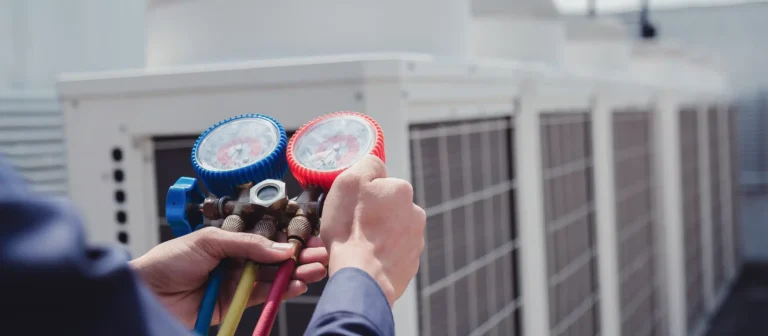
Air conditioning maintenance helps catch these issues before replacement day. A proper air conditioning tune-up is not just rinsing the outdoor coil and applying a sticker to the furnace like a badge of honor. It should include enough inspection to notice poor airflow signs, dirty coils, failing components, drainage concerns, and operational issues. Maintenance does not make equipment immortal, but it can keep small problems from becoming “Why is there ice on the copper pipe and water on the ceiling?” problems.
The difference between installation, repair, and maintenance
Customers often use “service” as a blanket word. Contractors know the difference. Air conditioning repair, maintenance, and installation require overlapping skills, but the goals are different.
Installation creates the system or replaces major equipment. Air conditioning repair service restores function when something has failed or is failing. Maintenance keeps the system clean, adjusted, and checked so failures are less likely and performance stays closer to where it belongs.
Here is the simplest way I explain it when someone asks why they need all three over the life of the equipment:
- Installation is the foundation. If it is wrong, everything else has to fight uphill.
- Maintenance is the habit. It keeps dirt, wear, drainage issues, and minor faults from quietly gaining territory.
- Repair is the rescue. It fixes specific problems when parts fail, settings drift, or conditions damage the system.
- Tune-up work is the checkup. It verifies operation and often catches the awkward little details before they become expensive.
- Replacement is the reset. It gives the home a new opportunity, provided the old mistakes are not carefully reinstalled.
A bargain installation can become a subscription plan for repair calls. A careful installation may cost more at the beginning, but it gives the equipment a fair chance. That does not mean nothing will ever break. Mechanical equipment lives in heat, moisture, dust, vibration, and electrical reality. Things fail. But good installation removes many of the self-inflicted wounds.
The customer’s role, yes, you have one
Homeowners do not need to become HVAC technicians. Frankly, most have enough to do. But a little attention during installation can improve the outcome and prevent misunderstandings.
Ask about equipment sizing. Ask how the contractor will verify refrigerant charge. Ask whether the existing duct system can support the new equipment. Ask about filter access, thermostat compatibility, condensate drainage, and maintenance. These are not annoying questions. They are adult questions. If a contractor reacts as if you asked them to recite Shakespeare while brazing, that tells you something.
The customer should also explain comfort problems honestly. “The house never cools” is useful. “The west bedroom gets hot after 3 p.m.” is more useful. “We close three vents downstairs because the baby’s room gets cold” is extremely useful, even if it makes the airflow gods wince. The contractor needs the truth, not the showroom version of the house.
A good contractor listens for clues. Hot rooms, noisy returns, frequent cycling, water stains near the air handler, tripped breakers, thermostat weirdness, musty odors, and repeated repairs all point somewhere. Sometimes they point to the air conditioner. Sometimes they point to ductwork, drainage, controls, electrical issues, or building conditions. The best diagnosis is rarely the one shouted first.
When replacement is not only about cooling
An air conditioning installation may be tied to other projects. A furnace replacement can affect the indoor coil and blower. A heat pump installation changes heating and cooling strategy. Water heater installation or water heater repair may happen during the same service relationship, though it remains a separate job. Plumbing repiping or water softener installation can be part of a broader home upgrade plan. Septic system service is a different specialty, but homes with multiple mechanical concerns often force owners to prioritize: comfort, hot water, drainage, reliability, and budget all compete for the same wallet.
That is where professional judgment matters. Not every problem should be bundled into one giant project. Not every old part needs immediate replacement. But ignoring system relationships can create waste. For example, replacing cooling equipment while leaving an obvious airflow restriction untouched may disappoint everyone. Replacing a furnace without considering the connected air conditioning components can create compatibility headaches. Installing a heat pump without thinking through controls and backup heating needs can lead to callbacks and chilly conversations.
The contractor’s job is to explain the trade-offs plainly. Customers can handle the truth. What they cannot handle is discovering after installation that the “new system” still inherited the old limitations.
The funny little details that separate neat work from grief
Every experienced technician has seen installations that looked fine from the curb and ridiculous up close. Equipment jammed against walls. Access panels blocked by pipes. Filters located where only a raccoon with a flashlight could reach them. Condensate drains run uphill, apparently in defiance of both plumbing practice and gravity, which remains undefeated. Low-voltage wires stretched tight like guitar strings. Line sets rubbing against masonry. Disconnects placed where service becomes a yoga routine.
These details do not always show up on the sales proposal. They show up years later when someone has to maintain or repair the system. Neat installation is not vanity. It is serviceability, reliability, and respect for the next person on the job.
A tidy job also helps with diagnosis. When wiring is orderly, drains are accessible, ducts are sealed cleanly, and equipment has proper working space, the next air conditioning repair goes faster. Faster diagnosis often means lower labor cost and fewer guesses. Mystery is fun in novels. It is less charming at 6 p.m. On the hottest Friday of July.
Choosing an air conditioning contractor without needing a detective board
The right contractor should be able to speak fluently about installation, maintenance, repairs, airflow, refrigerant charging, and equipment sizing without drowning you in jargon. They should understand where HVAC work intersects with plumbing and electrical work, and they should know when another trade needs to be involved. Confidence is good. Swagger is not a credential.
Price matters, of course. Nobody pays invoices with compliments. But the lowest price can hide missing steps. If one quote is far lower than the others, the useful question is not “How lucky am I?” It is “What is not included?” Maybe the contractor has a legitimate efficiency. Maybe the scope is thinner than deli ham.
Five practical questions can reveal a lot before you sign:
- How will you determine the correct equipment size for my home?
- Will you check the duct system and airflow before or during installation?
- How will refrigerant charge be verified at startup?
- What electrical, drain, or related work is included, and what would require a separate electrician or plumber?
- How will future maintenance access be handled?
Listen to the answers. A good contractor does not need to perform a courtroom monologue. They should answer directly, explain limits, and identify assumptions. If they promise perfection before looking at the house, be careful. Houses are where perfect plans go to develop a limp.
Maintenance after installation is not optional decor
After a proper installation, the system still needs care. Air conditioning maintenance protects the investment by keeping coils cleaner, drains clear, components checked, and performance monitored. A tune-up cannot erase age, but it can slow the march toward failure. It can also reveal whether installation issues are developing into operational problems.
Customers sometimes skip maintenance because the system is new. That is understandable and also unwise. New equipment still moves air through check here filters, collects debris outdoors, creates condensate, and operates under electrical and mechanical stress. The first few seasons can reveal whether everything is settling properly. Catching a small drain issue or airflow concern early is better than meeting it later as ceiling damage or a compressor failure.
Maintenance also creates history. When a contractor has records of pressures, temperatures, electrical readings, drainage condition, and repair notes, future service becomes smarter. Without history, every repair call begins as a cold case.
Why proper installation pays off quietly
The best HVAC installation is almost boring after it is finished. The system starts. It cools. It drains. It runs without dramatic noises. The thermostat behaves. The bedrooms are livable. The homeowner stops thinking about the air conditioner, which is the highest compliment most mechanical equipment can receive.
That quiet success comes from a chain of correct decisions. Correct sizing. Proper refrigerant charging. Sound airflow. Safe electrical connection. Sensible condensate management. Serviceable placement. Honest communication. Appropriate coordination with plumbing, electrical, heating, or gas work when the job requires it.
Air conditioning contractor work belongs in the skilled trades because it demands practical intelligence. It is not just equipment delivery with a side of sheet metal. It is applied physics in dusty closets, hot attics, crawlspaces, garages, rooftops, and mechanical rooms. It is part comfort, part safety, part energy performance, part customer service, and part stubborn refusal to let gravity, heat, and bad access win.
A homeowner may only see the final result: cool air from the vents. The contractor sees the system behind that comfort. And if the work is done well, nobody has to think much about it again until maintenance time, which is exactly how air conditioning should be. Quiet, steady, and not the subject of dinner conversation unless someone is bragging that the upstairs finally feels human.
Name: Service Lion Plumbing Heating Air Electric
Address: 521 W Briardale Ave, Orange, CA 92865, United States
Phone: (657) 567-7305
Website: https://callservicelion.com/
Email: [email protected]
Hours:
Monday: Open 24 hours
Tuesday: Open 24 hours
Wednesday: Open 24 hours
Thursday: Open 24 hours
Friday: Open 24 hours
Saturday: Open 24 hours
Sunday: Open 24 hours
Open-location code: R48R+WV Orange, California, USA
Map/listing URL:
https://www.google.com/maps/search/?api=1&query=Google&query_place_id=ChIJQU4LBWHV3IARtnABtyykSA4
Google Map:
Socials:
https://www.facebook.com/ServiceLionCA/
https://www.youtube.com/channel/UCR_L35QzsRTxYZtX8PxJvPw
Local Service Information
Service Lion Plumbing Heating Air Electric provides plumbing, drain, heating, air conditioning, and electrical services from its Orange, California location.The company serves homeowners and properties throughout Orange and communities across Orange County and surrounding areas.
Available services include plumbing repairs, water heater work, drain and sewer services, heating and cooling service, electrical repairs, panels, lighting, outlets, and related home-system work.
Service is available for residential properties as well as light commercial needs described within the company's local service-area information.
The company's website emphasizes locally operated service, coordinated home-system support, and practical scheduling for plumbing, HVAC, and electrical needs.
The matching public business listing shows the Orange location as open 24 hours a day, seven days a week.
For service information or scheduling, call (657) 567-7305 or visit https://callservicelion.com/.
The public map listing identifies the business at 521 W Briardale Ave, Orange, CA 92865 and can be used for location and direction information.
Popular Questions About Service Lion Plumbing Heating Air Electric
What services does Service Lion Plumbing Heating Air Electric provide?
The company provides plumbing, drain and sewer, heating, air conditioning, and electrical services. Its published services include plumbing repair, water heaters, drain clearing, sewer work, HVAC repair and installation, electrical repairs, panels, circuit breakers, lighting, outlets, and related services.
Where is Service Lion Plumbing Heating Air Electric located?
The matching business location is 521 W Briardale Ave, Orange, CA 92865, United States.
What areas does Service Lion Plumbing Heating Air Electric serve?
The company serves Orange County and surrounding communities. Its published service-area information includes Orange, Anaheim, Brea, Yorba Linda, Fullerton, Huntington Beach, Newport Beach, Costa Mesa, Irvine, Lake Forest, and additional nearby cities.
Is Service Lion Plumbing Heating Air Electric open 24 hours?
The matching public business listing shows the location as open 24 hours on Monday through Sunday.
Does Service Lion Plumbing Heating Air Electric work on drains and sewer lines?
Yes. Published services include drain clearing, rooter service, camera inspection, hydro jetting, sewer line repair and installation, water line work, slab leak detection, and trenchless sewer line repair.
Does Service Lion Plumbing Heating Air Electric provide heating and air conditioning service?
Yes. Its published HVAC services include air conditioning repair and installation, heating service, furnace work, heat pumps, air ducts, indoor air quality assessments, and thermostat installation.
Does Service Lion Plumbing Heating Air Electric provide electrical service?
Yes. Published electrical services include repairs and installations, electrical panels, circuit breakers, safety inspections, lighting, outlets and switches, surge protection, generators, and EV charging equipment installation.
How can I contact Service Lion Plumbing Heating Air Electric?
Call (657) 567-7305.
Email: [email protected]
Website: https://callservicelion.com/
Facebook: https://www.facebook.com/ServiceLionCA/
Landmarks Near Orange, California
Old Towne Orange Historic District
A central historic district and useful geographic reference point for the Orange community.
Plaza Park
A well-known public gathering point in the center of Old Towne Orange.
Orange Public Library & History Center
A civic landmark serving residents near central Orange.
Hart Park
A major public park and recreation area south of central Orange.
Eisenhower Park
A public park serving neighborhoods in northern Orange.
Santiago Oaks Regional Park
A regional recreation and open-space landmark on the eastern side of Orange.
Irvine Regional Park
A large regional park and recognizable reference point east of the city.
Orange Park Acres
A distinctive residential community and service-area reference point in eastern Orange.
El Modena
An established Orange neighborhood that provides a practical local coverage reference.
Glassell Street
One of the city's principal north-south streets and a useful route through central Orange.
Lincoln Avenue
A major east-west roadway serving northern Orange and nearby communities.
State Route 55
A primary regional freeway connecting Orange with other parts of Orange County.