Common Causes of Plumbing Leaks and How Plumbers Fix Them
A plumbing leak is a small domestic betrayal. One day your house is quietly doing house things, and the next day a pipe under the sink is performing its own tiny fountain show into a warped cabinet floor. Leaks rarely arrive with dignity. They drip into cereal bowls from ceiling lights, bloom brown stains above the sofa, hiss behind walls at 2 a.m., or make the water meter spin like it has somewhere important to be.
The good news is that most plumbing leaks are not mysterious to a seasoned plumber. They follow patterns. Certain materials fail in predictable ways. Certain fixtures wear out on a schedule. Certain “quick fixes” from previous owners, uncles, neighbors, and confident internet strangers tend to age about as well as a banana in a glove box.
The trick is finding the leak accurately, understanding why it happened, and repairing it in a way that does not simply move the problem six feet down the line. That is where professional Plumbing leak repair earns its keep.
Why leaks deserve more respect than a bucket under the sink
A drip looks harmless because each drop is tiny. Unfortunately, plumbing does not bill by drama. A slow leak can waste hundreds or thousands of gallons over time, and the water damage often costs more than the pipe repair. Cabinet bottoms swell. Subfloors soften. Drywall turns into a sponge with paint on it. Mold does not need a written invitation.
The sneaky leaks are usually worse than the obvious ones. A burst supply line announces itself like a marching band. A pinhole leak inside a wall may whisper for months. By the time you notice peeling paint or a musty smell, the wall cavity may already be hosting a very damp little ecosystem.
I have seen homeowners ignore a toilet that “just runs a little” because it did not seem urgent. Three months later, the water bill looked like they were irrigating a vineyard. I have also seen a tiny leak at a water heater connection rot out the platform beneath the tank. The customer called for Water heater repair, but the job had turned into carpentry, plumbing, and a lecture from the universe about preventative maintenance.
Leaks deserve prompt attention not because every drip is a catastrophe, but because nobody can tell from across the room whether it is a $20 washer, a failing shutoff valve, or the first clue that the home needs Plumbing repiping.
The usual suspects hiding in plain sight
Most plumbing leaks start in a few common places: pipe joints, fixture connections, water heaters, toilets, faucets, supply lines, drains, and buried or concealed piping. The exact cause depends on material, age, pressure, water chemistry, installation quality, soil movement, and how often someone has used the shutoff valve as a coat hook.
A good Plumber does not just hunt for wet spots. They read the system. They look at pipe type, corrosion patterns, valve age, pressure readings, fixture behavior, and stains. They listen for running water where nothing should be running. They check whether a drain leak only appears when the sink is full, whether a supply leak continues when fixtures are off, and whether the “ceiling leak” is actually condensation from an HVAC line, which is the kind of plot twist that keeps tradespeople humble.
Aging pipes and the slow revenge of time
Pipes age differently depending on what they are made of. Copper can last for decades, but it is not immortal. PEX has excellent resistance to scale and corrosion, but fittings and installation quality matter. Galvanized steel, common in many older homes, corrodes from the inside out until water pressure drops and rust flakes appear like sad confetti. Polybutylene, used in some homes from the late 1970s into the 1990s, has a reputation that makes plumbers sigh before coffee.
Older galvanized pipes are especially tricky because the outside may look tolerable while the inside has narrowed dramatically. A homeowner may notice weak flow at a bathroom sink and assume the faucet is clogged. Sometimes it is. Other times the pipe interior looks like a cave wall. When corrosion eats through, leaks start as damp spots or orange staining at joints.
Plumbers fix aging pipe leaks based on the condition of the whole system. A single accessible leak in otherwise healthy copper might call for cutting out the damaged section and soldering or pressing in a new piece. If the pipe is brittle, heavily corroded, or leaking in multiple locations, spot repairs become a game of plumbing whack-a-mole. That is when Plumbing repiping may be the honest recommendation. Nobody enjoys hearing it, but there is mercy in solving the whole problem instead of scheduling quarterly ceiling repairs.
High water pressure, the silent pipe bully
Water pressure feels like a luxury until it starts beating up the plumbing. Many homes do well somewhere around 40 to 60 psi. Some plumbing codes and fixture manufacturers allow higher pressures, often up to 80 psi, but consistently high pressure can shorten the life of valves, supply lines, toilet fill valves, water heaters, and appliance hoses.
High pressure does not always create an immediate leak. It stresses everything. The weakest part eventually complains. Maybe a faucet cartridge starts seeping. Maybe the toilet runs. Maybe the washing machine hose bubbles out like it is trying to grow a second hose.
A plumber checks pressure with a gauge, often at a hose bib or laundry connection. If the reading is high, the fix may involve adjusting or replacing a pressure reducing valve. If the home has a closed plumbing system, often because of a check valve or pressure regulator, thermal expansion from the water heater can also spike pressure. In that case, an expansion tank may be needed or replaced if it has failed.
This is one of those repairs where the visible leak is only the messenger. Replace the leaky faucet supply line without addressing 95 psi pressure, and the next weak part will volunteer for duty.
Corrosion, minerals, and water with attitude
Water is not just water. It carries minerals, dissolved gases, treatment chemicals, and sometimes enough personality to attack metal. Hard water leaves scale. Acidic water can eat copper. Chloramines and certain water conditions can stress some rubber parts. Well water may carry iron, sediment, or other minerals that clog valves and fixtures.
Hard water often announces itself through crusty white buildup around showerheads, faucets, and water heater fittings. Scale can interfere with seals and clog aerators. In water heaters, sediment settles at the bottom of the tank, causing rumbling noises and reducing efficiency. Over time, neglected sediment can contribute to premature tank failure.
Plumbers may recommend Water softener installation when hardness is severe enough to damage fixtures and appliances. That is not a magic wand for every plumbing issue, but it can help protect water heaters, faucets, dishwashers, and piping in the right conditions. For acidic water, treatment may require a neutralizer rather than a softener. The right fix starts with knowing what the water is doing, not simply throwing equipment at it like a contestant on a home improvement game show.
Bad fittings and questionable installation choices
A surprising number of leaks are not caused by age. They are caused by installation sins. Cross-threaded supply connections, overtightened compression fittings, poorly glued PVC, unsupported pipes, mismatched metals, and fittings used in places where they should never have been invited all create future leak opportunities.
Compression fittings are a common example. Tighten them too little and they seep. Tighten them like you are closing a submarine hatch and the ferrule can deform or the tube can crush. Toilet supply lines fail when kinked sharply. Faucet connections leak when old gaskets are reused. Thread seal tape wrapped the wrong way can bunch up and prevent a good seal. Yes, tape has a direction. Plumbing is full of small rules that become large puddles when ignored.
Professional plumbers fix these leaks by remaking the connection properly. That may sound simple, but the difference is in judgment. Sometimes a fitting can be cleaned and reseated. Sometimes it needs a new ferrule, washer, or supply line. Sometimes the pipe end is damaged and must be cut back. Sometimes the previous repair used three adapters where one correct fitting would do, creating a tiny metal sculpture of regret beneath the sink.
Fixture leaks: faucets, toilets, showers, and the daily drip orchestra
Fixture leaks are the ones homeowners notice most often because they happen where people live. A faucet drip. A toilet that refills every few minutes. Water escaping from a shower handle. A tub drain that stains the ceiling below. These leaks are common, but the causes vary.
A dripping faucet usually points to worn cartridges, washers, seats, or O-rings. Modern faucets often use cartridges specific to the brand and model. Older two-handle faucets may have washers and seats that can be replaced. The repair begins with shutting off the water, disassembling the handle, inspecting the internal parts, and replacing what has worn out. The glamorous life, truly.
Toilet leaks fall into two broad categories: leaks you can see and leaks you pay for quietly. Water around the base may mean a failed wax ring, loose flange bolts, a cracked toilet, or a bad supply connection. A running toilet often means the flapper is not sealing, the fill valve is misadjusted, or the overflow tube is involved. A dye test in the tank can confirm whether water is leaking into the bowl without flushing. If dye appears in the bowl after a short wait, the tank is leaking internally.
Shower leaks can be deceptive. Water showing up on the ceiling below may come from a valve inside the wall, a cracked shower pan, failed grout or caulk, a loose drain assembly, or even water spraying past a shower door. A careful plumber tests each possibility. They may run water into the drain without spraying the walls, then spray the walls without using the showerhead, then inspect the valve. It feels like a plumbing courtroom drama, but it prevents tearing open the wrong wall.
Five signs the leak is probably worse than “just a drip”
Here is one of the few times a short list earns its place, because these signs should speed up the phone call:
- The water meter moves when every fixture and appliance is off.
- A ceiling stain grows after showers, laundry, or dishwasher cycles.
- You hear hissing, rushing, or ticking sounds inside a wall.
- Flooring near a toilet, tub, or cabinet feels soft, swollen, or warm.
- The same fixture has been “fixed” more than once and keeps leaking.
None of these automatically means disaster. They do mean guessing has reached the end of its useful little rope.
Drain leaks and clogs that impersonate leaks
Not every plumbing leak comes from a pressurized water line. Drain piping can leak too, often only when water is flowing. This is why a cabinet may stay dry all day, then flood during dinner cleanup. The sink drain assembly, trap, slip nuts, tailpiece, garbage disposal connection, dishwasher drain hose, or branch drain can all leak.
Drain leaks are sometimes caused by clogs. When a drain line backs up, water sits where it normally would flow past quickly. Old joints, loose slip nuts, and weak seals then reveal themselves. Kitchen drains are especially prone to grease buildup. Bathroom drains collect hair, soap scum, toothpaste, and the occasional jewelry item that enters the drain with great confidence and no exit strategy.
Drain cleaning may solve the immediate backup, but the method matters. A hand snake can clear nearby clogs. A Rooter service can cut through tougher blockages farther down the line. Hydrojetting uses high-pressure water to scour pipe walls, which can Plumber be excellent for grease, sludge, and roots in suitable piping. The phrase “suitable piping” is doing important work there. Very old, fragile, or damaged pipes need inspection before aggressive cleaning. A camera inspection helps identify collapsed sections, root intrusion, bellies, and broken joints.
Plumbers fix drain leaks by resealing or replacing the leaking section, but if the underlying drain line is clogged or damaged, the leak will return. A shiny new trap under the sink is not much comfort if the branch line in the wall is packed like a holiday suitcase.
Water heater leaks: tank sweat, valve trouble, and the puddle of decision
Water heaters create their own leak category because they combine plumbing, pressure, heat, metal, and time. That is a spicy recipe.
A puddle near a water heater might come from the temperature and pressure relief valve, the drain valve, the cold or hot water connections, condensation, or the tank itself. Condensation can occur under certain conditions, particularly with gas water heaters during heavy use or when incoming water is cold. But a persistent puddle should not be waved away.
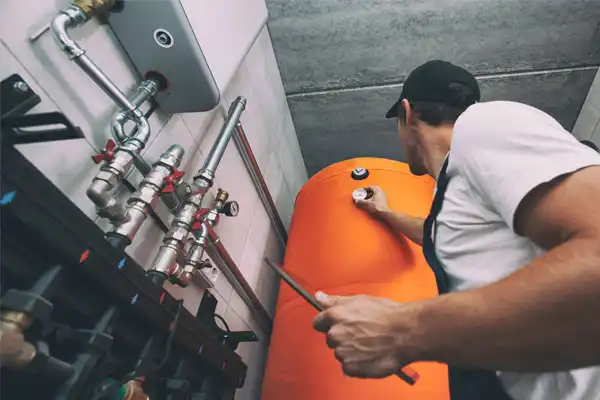
If the leak is from a threaded connection or valve, Water heater repair may be straightforward. A plumber can replace a leaking drain valve, repair a connection, install a proper expansion tank, or address pressure problems. If the tank itself is leaking, repair is generally not practical. Tank corrosion from the inside means Water heater installation is the real fix.
Age matters. Many tank water heaters last around 8 to 12 years, though water quality, maintenance, installation, and usage can push that number up or down. A six-year-old unit leaking from a fitting is a different conversation than a 15-year-old tank sweating rusty water from the bottom seam. One gets tools. The other gets measured for replacement while everyone avoids eye contact with the puddle.
Tankless water heaters have different leak points, often around connections, isolation valves, heat exchangers, or condensate drains. They also need maintenance. Descaling matters in hard water areas. Neglected tankless units can lose efficiency, throw error codes, and leak from components that would rather have been cleaned two years ago.
Hidden leaks behind walls, slabs, and ceilings
Hidden leaks are the reason plumbers carry diagnostic tools and homeowners develop trust issues with drywall. A leak behind a wall may show as bubbling paint, warped baseboards, musty odor, staining, or unexplained water bills. A slab leak may create warm floor spots, damp flooring, reduced water pressure, or the sound of running water beneath concrete.
Finding a hidden leak is part science, part experience, part knowing where builders like to route pipes when nobody is watching. Plumbers may use moisture meters, thermal imaging, acoustic listening equipment, pressure testing, and isolation methods. The goal is to avoid unnecessary demolition. Nobody wants to open six wall cavities to find one pinhole, unless they are being paid by the hole, and reputable plumbers are not.
Slab leaks require careful judgment. Sometimes the best repair is opening the slab and fixing the pipe directly. Other times rerouting the line overhead or through walls makes more sense, especially if the pipe under the slab is deteriorating or difficult to access. In homes with repeated slab leaks, repiping may be the better long-term choice.
Insurance may enter the picture with hidden leaks, depending on the policy, cause, timing, and damage. Plumbing companies can document findings, but coverage decisions belong to insurers. The important practical advice is simple: do not wait. A slow hidden leak can turn structure, flooring, and cabinetry into a very expensive biology experiment.
Outdoor leaks, sewer lines, and septic surprises
Outdoor plumbing leaks can be easy to miss because soil hides the evidence. A soggy patch in the yard, unusually lush Great post to read grass, low water pressure, or a high bill may point to a leaking water service line. Irrigation systems can leak too, and they are particularly good at wasting water while pretending to be landscaping.
Water service lines fail from age, shifting soil, poor installation, tree roots, freezing, corrosion, or mechanical damage. The repair may involve excavation, spot repair, or replacement of the service line. Modern trenchless methods may be available in some situations, depending on soil, pipe path, local code, and the condition of the existing line.
Sewer leaks and backups bring a different kind of urgency, and not the charming kind. Tree roots enter through cracks or loose joints. Old clay or cast iron lines can break, sag, or corrode. Grease and wipes can clog lines. Even products labeled “flushable” often behave in sewer lines like they have tenure.
A Septic system service may be needed when the home is not connected to municipal sewer. Septic issues can resemble drain problems inside the house, but the causes may include a full tank, failed drain field, blocked line, or broken baffle. A plumber can often help identify whether the issue is inside plumbing, the building sewer, or the septic system, but septic tank pumping and drain field work may involve specialized septic contractors.
How plumbers actually track a leak
Leak diagnosis starts with questions. When did you first notice it? Does it happen only when it rains? Only after showers? Is the water hot or cold? Did anyone recently install a dishwasher, refrigerator, toilet, vanity, water heater, or flooring? Has the water bill changed? Has the home had prior leaks?
Then comes testing. A plumber may shut off fixtures, watch the meter, pressurize sections of piping, run individual fixtures, inspect crawl spaces, check ceilings with a moisture meter, and test drains separately from supply lines. The best plumbers resist the urge to guess too early. A stain beneath a bathroom could be a toilet, tub drain, shower valve, supply line, or failed caulk. It could also be the upstairs kid treating bath time like marine training.
What a plumber may do during leak diagnosis
- Check the water meter or pressure gauge to confirm an active supply leak.
- Inspect visible piping, valves, fixtures, water heater connections, and appliance hoses.
- Run fixtures one at a time to separate drain leaks from supply leaks.
- Use moisture, thermal, or acoustic tools when water is concealed.
- Open the smallest practical access point only after testing narrows the location.
That sequence saves money and drywall. It also prevents the classic homeowner tragedy of replacing a toilet when the shower drain was the culprit all along.
The repair depends on the pipe, the place, and the reason it failed
There is no single best leak repair. There is only the best repair for that specific system. Copper can be soldered, brazed, or joined with press fittings. PEX may use crimp, clamp, expansion, or push-fit fittings depending on the system and local code. CPVC requires proper solvent cement and handling because older CPVC can become brittle. PVC drain lines need correct cutting, cleaning, primer where required, cement, slope, and support. Cast iron may require cutting and shielded couplings or replacement sections.
A repair in a wide-open basement ceiling is different from a repair inside a tiled shower wall. Accessibility affects method. So does risk. A plumber may choose a more durable repair even if it takes longer because the line will be buried behind finished materials. Under a sink, replacing an old shutoff valve and supply line is quick and visible. Behind a wall, the work needs a longer view.
There are also code and safety issues. Gas water heaters involve venting, combustion air, temperature and pressure relief piping, and sometimes coordination with a Gas installation service. Electric water heaters may require an Electrician if wiring, breakers, or disconnects are unsafe or undersized. A leak near electrical fixtures, panels, or lighting should be taken seriously. Water dripping through a ceiling light is not a quirky ambience feature. That is when a Lighting contractor or electrician may need to inspect after the plumbing source is stopped.
Plumbing leaks sometimes overlap with HVAC systems too. A ceiling stain near an air handler may come from an AC condensate drain, not plumbing. An Air conditioning contractor or Air conditioning repair service may be needed if the condensate line is clogged, the drain pan is rusted, or the unit is icing over and melting. Regular Air conditioning maintenance and an Air conditioning tune-up can prevent some of these “plumbing leak” false alarms. The same crossover happens around furnaces, humidifiers, boilers, and heat pumps. A Heating contractor, Furnace repair service, or Heat pump installation technician may be involved when water is coming from mechanical equipment rather than pipes.
Homes do not care which trade owns the puddle. They just leak.
When a small repair is enough, and when replacement makes more sense
A good plumber should be comfortable saying, “This is a small repair,” when it is. Not every leak requires a sales pitch, a financing brochure, and dramatic music. A loose packing nut, worn faucet cartridge, cracked supply line, failed toilet flapper, or leaking trap can often be handled quickly.
Replacement makes sense when the component is near the end of its life, when parts are unavailable, when repeated repairs cost more than replacement, or when the surrounding system is failing. Replacing one leaking shutoff valve under a sink is sensible. Replacing all the crusty, frozen, 40-year-old angle stops during a remodel may be even more sensible. Nobody wants to discover a valve does not shut off during an emergency. That is like learning your parachute is decorative.
Water heaters are a common judgment call. If a relatively new unit leaks from an accessible fitting, repair it. If an old tank leaks from the tank body, replace it. If the home’s hot water needs have changed, Water heater installation may include resizing or switching type. Families with teenagers sometimes discover that hot water demand is not a plumbing load so much as a lifestyle crisis.
Repiping is another judgment call. One pinhole leak in copper does not automatically mean the whole home needs new pipe. Multiple leaks, discolored water, poor pressure, widespread corrosion, or known problematic piping materials shift the conversation. A plumber should explain the evidence clearly, not scare people into decisions. Fear is a lousy diagnostic tool, though admittedly very good at selling things.
Prevention: boring habits that save exciting amounts of money
Leak prevention is mostly unglamorous. That is its charm. Look under sinks occasionally. Know where the main shutoff is. Replace old washing machine hoses. Do not ignore running toilets. Keep water pressure in a healthy range. Flush tank water heaters when appropriate for the model and local water conditions. Maintain water treatment equipment. Clear slow drains before they become backups. Schedule Drain cleaning when clogs keep returning, and consider camera inspection for repeat mainline issues.
Air conditioning maintenance matters too when HVAC condensate drains share the same ceiling spaces and closets where plumbing lives. A clogged condensate line can damage ceilings just as effectively as a pipe leak. The water does not wear a name tag.
In freezing climates, protect hose bibs and exposed piping. Disconnect hoses before winter. Insulate vulnerable pipes. Seal air leaks in crawl spaces and exterior walls. A frozen pipe may not leak until it thaws, which is plumbing’s version of delayed sarcasm.
If you have a water softener, maintain it. If you do not and your fixtures are constantly crusted with mineral scale, ask whether Water softener installation makes sense. If your water heater is aging, keep an eye on the pan, valve, and connections. If your home has a sump pump, test it before storm season rather than during the storm while wearing pajamas and bargaining with gravity.
The homeowner’s role before the plumber arrives
When you notice a leak, the first job is limiting damage. Shut off the fixture valve if possible. If that does not stop it, use the main shutoff. Move valuables away from the water. Put a container under drips if it is safe. If water is near outlets, fixtures, appliances, or the electrical panel, avoid contact and call for help. Electricity and water together have a poor sense of humor.
Take photos before cleanup if damage is significant, especially if insurance may be involved. Note when the leak started and what was running at the time. If the leak appears only during use, tell the plumber. “It leaks when we shower” is far more useful than “the ceiling hates us.”
Avoid heroic chemical drain cleaners, especially if the drain is fully blocked. They can sit in the pipe, fail to clear the clog, and create a hazard for the plumber who has to open the line. They can also damage some piping and finishes. A proper Rooter service or Hydrojetting, used appropriately, is usually a better answer for stubborn clogs.
And please, do not cut random holes in walls unless water is actively pouring and access is necessary to stop it. Plumbers are quite good at making targeted holes. Homeowners under stress tend to create abstract art.
Why professional repair beats the “good enough” patch
Temporary patches have their place. A clamp, tape, bucket, or shutoff can buy time during an emergency. But temporary is the key word, and it deserves to be printed in bold on every roll of miracle tape ever sold.
Professional Plumbing leak repair addresses pressure, pipe condition, connection quality, support, code requirements, and future access. Plumbers also carry parts that actually match the system. That matters more than people think. The wrong fitting may hold for a while, then fail at the worst possible time, usually when guests are over or the family is out of town.
There is also accountability. A licensed plumber should stand behind the work, carry appropriate insurance, and know local code. The same goes for related trades. An Electrician should handle unsafe wiring. An Air conditioning repair technician should address condensate and cooling equipment problems. A Heating contractor should handle furnace or heat pump related water issues. Good homes are maintained by people who know where their expertise ends and the next trade begins.
The best repair is rarely the flashiest. It is clean, dry, properly supported, accessible when possible, and boring to look at. Boring plumbing is the dream. Exciting plumbing usually comes with towels.
A dry house is a happy house
Leaks happen. Materials age, seals wear, roots invade, pressure rises, water chemistry misbehaves, and someone eventually stores a cast iron skillet on a flexible supply line under the sink. Houses are full of little systems making quiet agreements with physics, and physics keeps excellent records.
The important thing is to treat leaks as clues, not nuisances. A drip at a fitting may be a simple washer. A recurring ceiling stain may point to a drain, shower valve, roof issue, or condensate line. A water heater puddle may be a valve or the final bow of the tank. The right plumber finds the cause, explains the options, and fixes the problem without turning your home into a demolition documentary.
If you know where your shutoff is, watch for early signs, maintain the systems that use water, and call qualified help before the puddle develops a personality, you can avoid most of the ugly outcomes. Plumbing may never be glamorous, but when it is done well, it gives you one of life’s underrated luxuries: turning on a tap, flushing a toilet, running a shower, and not wondering what is happening behind the wall.
Name: Service Lion Plumbing Heating Air Electric
Address: 521 W Briardale Ave, Orange, CA 92865, United States
Phone: (657) 567-7305
Website: https://callservicelion.com/
Email: [email protected]
Hours:
Monday: Open 24 hours
Tuesday: Open 24 hours
Wednesday: Open 24 hours
Thursday: Open 24 hours
Friday: Open 24 hours
Saturday: Open 24 hours
Sunday: Open 24 hours
Open-location code: R48R+WV Orange, California, USA
Map/listing URL:
https://www.google.com/maps/search/?api=1&query=Google&query_place_id=ChIJQU4LBWHV3IARtnABtyykSA4
Google Map:
Socials:
https://www.facebook.com/ServiceLionCA/
https://www.youtube.com/channel/UCR_L35QzsRTxYZtX8PxJvPw
Local Service Information
Service Lion Plumbing Heating Air Electric provides plumbing, drain, heating, air conditioning, and electrical services from its Orange, California location.The company serves homeowners and properties throughout Orange and communities across Orange County and surrounding areas.
Available services include plumbing repairs, water heater work, drain and sewer services, heating and cooling service, electrical repairs, panels, lighting, outlets, and related home-system work.
Service is available for residential properties as well as light commercial needs described within the company's local service-area information.
The company's website emphasizes locally operated service, coordinated home-system support, and practical scheduling for plumbing, HVAC, and electrical needs.
The matching public business listing shows the Orange location as open 24 hours a day, seven days a week.
For service information or scheduling, call (657) 567-7305 or visit https://callservicelion.com/.
The public map listing identifies the business at 521 W Briardale Ave, Orange, CA 92865 and can be used for location and direction information.
Popular Questions About Service Lion Plumbing Heating Air Electric
What services does Service Lion Plumbing Heating Air Electric provide?
The company provides plumbing, drain and sewer, heating, air conditioning, and electrical services. Its published services include plumbing repair, water heaters, drain clearing, sewer work, HVAC repair and installation, electrical repairs, panels, circuit breakers, lighting, outlets, and related services.
Where is Service Lion Plumbing Heating Air Electric located?
The matching business location is 521 W Briardale Ave, Orange, CA 92865, United States.
What areas does Service Lion Plumbing Heating Air Electric serve?
The company serves Orange County and surrounding communities. Its published service-area information includes Orange, Anaheim, Brea, Yorba Linda, Fullerton, Huntington Beach, Newport Beach, Costa Mesa, Irvine, Lake Forest, and additional nearby cities.
Is Service Lion Plumbing Heating Air Electric open 24 hours?
The matching public business listing shows the location as open 24 hours on Monday through Sunday.
Does Service Lion Plumbing Heating Air Electric work on drains and sewer lines?
Yes. Published services include drain clearing, rooter service, camera inspection, hydro jetting, sewer line repair and installation, water line work, slab leak detection, and trenchless sewer line repair.
Does Service Lion Plumbing Heating Air Electric provide heating and air conditioning service?
Yes. Its published HVAC services include air conditioning repair and installation, heating service, furnace work, heat pumps, air ducts, indoor air quality assessments, and thermostat installation.
Does Service Lion Plumbing Heating Air Electric provide electrical service?
Yes. Published electrical services include repairs and installations, electrical panels, circuit breakers, safety inspections, lighting, outlets and switches, surge protection, generators, and EV charging equipment installation.
How can I contact Service Lion Plumbing Heating Air Electric?
Call (657) 567-7305.
Email: [email protected]
Website: https://callservicelion.com/
Facebook: https://www.facebook.com/ServiceLionCA/
Landmarks Near Orange, California
Old Towne Orange Historic District
A central historic district and useful geographic reference point for the Orange community.
Plaza Park
A well-known public gathering point in the center of Old Towne Orange.
Orange Public Library & History Center
A civic landmark serving residents near central Orange.
Hart Park
A major public park and recreation area south of central Orange.
Eisenhower Park
A public park serving neighborhoods in northern Orange.
Santiago Oaks Regional Park
A regional recreation and open-space landmark on the eastern side of Orange.
Irvine Regional Park
A large regional park and recognizable reference point east of the city.
Orange Park Acres
A distinctive residential community and service-area reference point in eastern Orange.
El Modena
An established Orange neighborhood that provides a practical local coverage reference.
Glassell Street
One of the city's principal north-south streets and a useful route through central Orange.
Lincoln Avenue
A major east-west roadway serving northern Orange and nearby communities.
State Route 55
A primary regional freeway connecting Orange with other parts of Orange County.